Associated Press
February 9, 2007
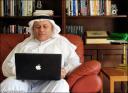
Bahraini blogger Mahmood al-Yousif works on his laptop at his house in Manama, Bahrain. There are now hundreds of Arabic- and Farsi-language blogs posted from the Middle East.
AP Photo/Courtesy Mahmood al-Yousif
CAIRO, Egypt – Wael Abbas hasn’t been arrested by Egyptian police, but the blogger fears it could happen any day.
A democracy activist who never leaves home without a camera, he has drawn the attention of state security by posting videos that show what many Egyptians only talk about behind closed doors  police brutality and male harassment of women on the street, such as fondling.
Abbas is just part of a wave of Middle Eastern bloggers who are eroding tight government control on information and thus drawing intense scrutiny from police.
Egyptian authorities arrested a string of prominent bloggers last year, including one who remains jailed and is on trial for allegedly defaming Islam by posting criticism of Islamic institutions on his Arabic-language blog.
“I might be next,” Abbas said at a Cairo coffee shop. He said his family has received anonymous phone calls asking about him, which he suspects come from state security.
“I think there is a campaign against the bloggers here,” he said. “We are exposing what all Egyptians know but weren’t talking about.”
Mideast governments for decades have dominated the media, trying to keep a monopoly on information and deter criticism of authorities. But bloggers are chipping away, writing about everything from human rights to the region’s rulers to the most taboo topic  Islam.
Weblogs  or blogs for short  started taking off in the Mideast a few years ago as access to the Internet and technology for creating sites grew. There are now hundreds of Arabic- and Farsi-language blogs posted from the Middle East.
Many of the blogs are just personal musings. But many others strive to tackle political and social issues, and their authors are increasingly getting into trouble, with governments blocking their sites and throwing them in jail.
“I firmly believe that blogs now with normal people using them have become the fifth estate. They watch the watchers, especially in this area of the world, because there are no controls over them,” said Mahmood al-Yousif, a Bahraini blogger.
Al-Yousif said his blog was blocked by authorities briefly last year after he published articles about an election-related scandal on the Persian Gulf island kingdom.
Reporters Without Borders has five Mideast countries  Egypt, Iran, Saudi Arabia, Tunisia and Syria  on its list of the globe’s 13 worst Internet freedom enemies that block Web sites and detain bloggers.
Governments defend their Web regulations, saying they are protecting citizens from “immoral” and “defamatory” content. But rights groups and bloggers say officials are really trying to retain their media control.
“Five years ago, authorities didn’t care about bloggers because the Internet’s reach was less,” said Julien Pain, head of Reporters Without Borders’ Internet Freedom Desk. “Now, what is most interesting is the Weblogs in the local languages. You look at what the authorities censor  they censor content in local languages.”
Rights groups have been especially critical of Iran, where there have been some arrests of bloggers. Iran has also blocked some Web sites critical of the government _ even shutting down access to the video-sharing forum YouTube.com, where Iranian opposition groups abroad have posted videos.
Hamed Mottaghi, an Iranian freelance journalist, blogs in Farsi about human rights from the Iranian holy city of Qom. But Iranians can’t view his Web site inside the country  authorities blocked it last year.
That hasn’t stopped Mottaghi. He and another Iranian blogger recently won awards from Reporters Without Borders for taking strong stances on freedom of information.
“The number of bloggers is increasing in Iran since people cannot express themselves easily in the society, which lacks freedom. Young people especially are looking for a different place to open dialogue,” Mottaghi said.
But some say the jury is still out on whether online opposition will transform into social and democratic reform in the Middle East. Though the number of Internet users has grown nearly fivefold since 2000, only about 10 percent of the region’s people have access to the Internet, according to the online Internet World Stats, which monitors Web usage around the world.
A mass pro-democracy movement has not emerged, said Jesse Sage, of the U.S.-based civil rights organization Hands Across the Middle East Support Alliance, which has worked with activists including bloggers in the region.
“Blogging is about venting, and the challenge is whether we can move from venting to acting, and that remains to be seen,” Sage said.
But Saudi Arabian blogger Ahmed al-Omran, a pharmacy student who runs one blog in English and another in Arabic, believes the blog movement will make a difference.
“It’s a good chance now for bloggers here,” he said. “Saudi Arabia is changing, and the margin for freedom of expression is getting bigger and bloggers are taking advantage of this.”
Some blogs in the Middle East:
EGYPT:
• http://misrdigital.blogspirit.com Arabic-language blog by democracy activist Wael Abbas. Has been instrumental in bringing attention to police torture and sexual attacks on women, publishing videotaped accounts of both in recent months.
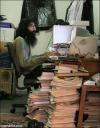
Hamed Mottaghi, a 29-year-old Iranian freelance journalist, who blogs in Farsi about human rights, works on his computer at his home in the city of Qom.
AP Photo
• http://karam903.blogspot.com Arabic blog by Abdel Kareem Nabil, on trial for allegedly insulting Islam and causing sectarian strife with Internet writings critical of Islamic institutions in Egypt.
• http://www.manalla.net Arabic and English political blog by husband and wife team, Alaa Abdel-Fattah and Manal Hassan. Abdel-Fattah held six weeks last year after being arrested during rally at Cairo court in support of other detained democracy activists.
SYRIA:
• http://saroujah.blogspot.com English blog by Sasa Kajam. Called Syria News Wire, says it features “independent news from the streets of Syria and Lebanon.”
SAUDI ARABIA:
• http://saudijeans.blogspot.com English blog by Ahmed al-Omran, pharmacy student who writes about politics, social issues and trends.
IRAN:
• http://hamedmottaghi.blogfa.com Farsi blog by Hamed Mottaghi, freelance journalist who lives in holy city of Qom and writes about human rights, culture and other social issues.
• http://www.kosoof.com Farsi photo blog that publishes pictures of Iranian dissidents with their families after release from prison.
(Both Iranian blogs were awarded Reporters Without Borders prize during 2006 Deutsche Welle International Weblog Awards for taking strong stands on freedom of information.)
BAHRAIN:
• https://mahmood.tv English blog by Mahmood al-Yousif, Bahraini businessman who writes about politics, human rights and daily life on Persian Gulf island kingdom.
• http://www.mideastyouth.com; http://www.mefaith.com; http://www.inter-iman.com Run by Esra’a al-Shafei, first two are in English, third in Arabic. Focus on bringing together voices from across region, including Israel and Iran, to discuss politics, gender and religion.
Comments
Speaking of Kareem, there will be a worldwide demonstration on the 15th of this month, in over 5 countries and various states within the U.S.
That said, members of the Supreme Court, as well as President Carter, will possibly call and write to Mubarak directly. 2 Congressmen already did that. Our friends in Rome got three MPs to write letters to the Egyptian Ambassador, and dozens of NGOs and liberal associations across the world are inspiring local action to support our brave friend Kareem.
Who said average bloggers can’t make a difference in the region?
We started out with a website, now the entire world is behind us, mostly thanks to blogging.